
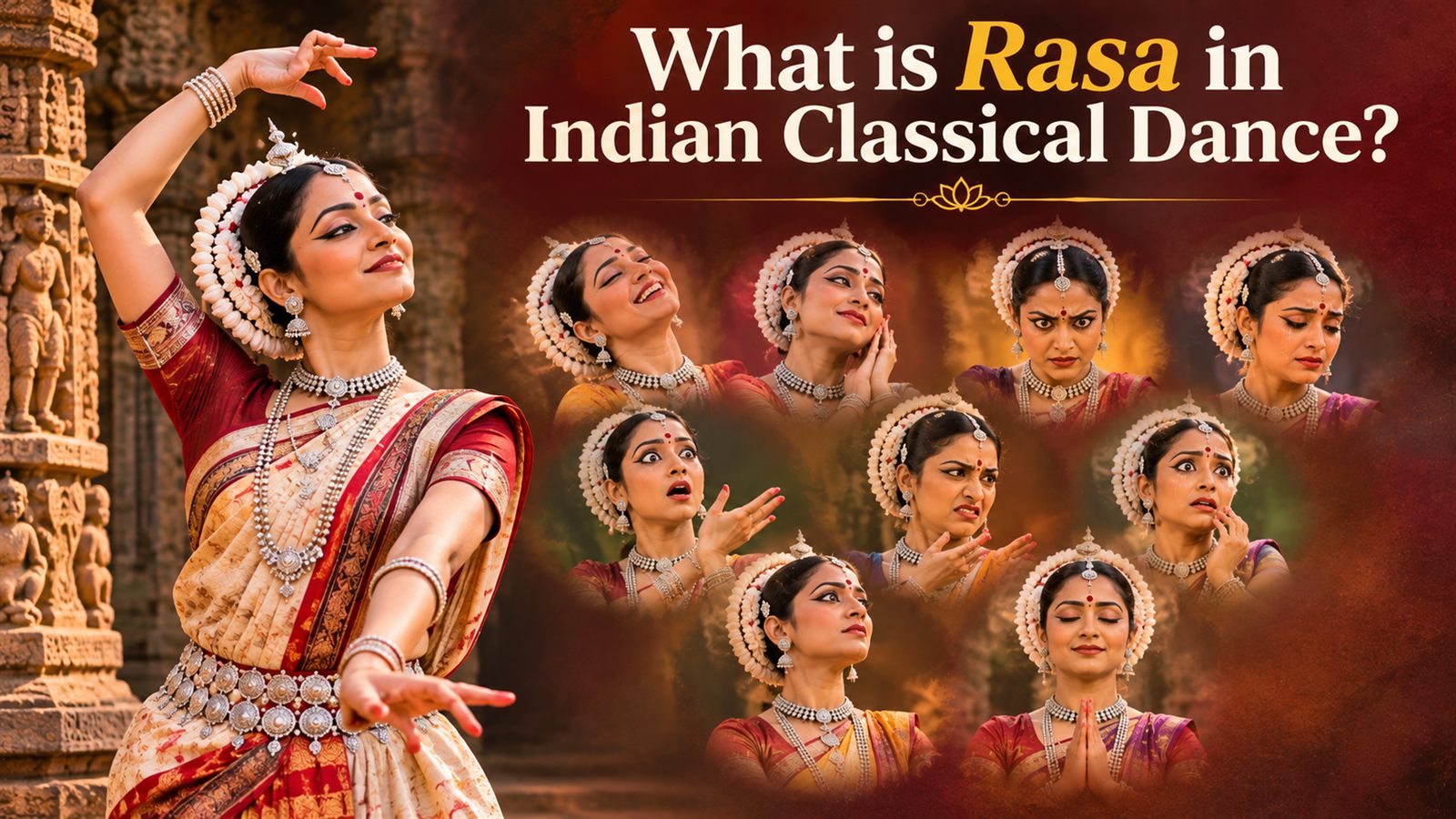
Quick Answer: Rasa in Indian classical dance is the emotion the audience feels while watching a performance. The dancer shows bhava, and the audience feels it as rasa. There are nine rasas, called the navarasas, from love and humour to wonder and peace.
Rasa is one of the most important concepts in Indian classical dance. The word rasa means essence, flavour, or emotional experience.
In simple words, rasa is the emotion that the audience feels while watching a performance.
Indian classical dance is not only about steps, rhythm and movement. It is also about emotion. A dancer may show love, courage, sorrow, devotion, anger, wonder or peace. When the audience feels that emotion through the performance, rasa is created.
Rasa in the Natyashastra
The idea of rasa is explained in the Natyashastra, the ancient Indian text on dance, drama and music.
According to the Natyashastra, performance should create an aesthetic experience for the audience. This means that dance should not only be watched. It should also be felt.
Rasa is what makes a performance meaningful. It connects the dancer, the music, the story and the audience.
In Indian classical dance forms like Odissi, Bharatanatyam, Kathak and Kuchipudi, rasa helps bring the performance alive.
Bhava and Rasa
To understand rasa, it is useful to understand bhava.
Bhava means the emotion or state shown by the performer. Rasa is the experience created in the audience.
For example, if a dancer shows longing, devotion or sorrow, that is bhava. When the audience feels the beauty of that emotion, it becomes rasa.
So, bhava is expressed by the dancer. Rasa is experienced by the audience.
This relationship between bhava and rasa is very important in Indian classical dance. The dancer uses expression, gesture, rhythm and movement to show bhava. The audience receives that emotion as rasa.
The Nine Rasas in Indian Classical Dance
There are nine rasas commonly discussed in Indian classical dance. These are called the navarasas.
- Shringara – love and beauty
- Hasya – humour
- Karuna – compassion or sorrow
- Raudra – anger
- Veera – courage or heroism
- Bhayanaka – fear
- Bibhatsa – disgust
- Adbhuta – wonder
- Shanta – peace
Each rasa creates a different emotional mood in the performance.
The nine rasas help dancers show a wide range of human emotions. They also help the audience understand the emotional journey of the character or story.
Examples of Rasa in Dance
Shringara rasa may be seen when Radha waits for Krishna or expresses love and longing.
Karuna rasa may be seen when a character feels sorrow, separation or compassion.
Veera rasa may be shown in stories of courage, strength and determination.
Raudra rasa may appear when a character shows anger or intensity.
Adbhuta rasa may be created when a character experiences wonder or amazement.
Shanta rasa is connected with peace, calmness and spiritual stillness.
These emotions are not shown randomly. They are created through expression, music, rhythm, poetry and movement.
How Does a Dancer Create Rasa?
A dancer creates rasa through many elements working together.
These include:
- Facial expressions
- Eye movements
- Hand gestures
- Body movement
- Rhythm
- Music
- Costume
- Poetry
- Storytelling
In Indian classical dance, all these elements come together to create a complete experience.
For example, the same hand gesture may have different meanings depending on the face, music and situation. This is why rasa depends on the whole performance, not just one movement.
Abhinaya and Rasa
Abhinaya and rasa are closely connected.
Abhinaya means expression or communication. It is the way a dancer shows meaning and emotion. Through abhinaya, the dancer expresses bhava.
When the audience experiences that emotion, rasa is created.
This is why abhinaya is very important in Indian classical dance. Without expression, the audience may see the movement but may not feel the emotion behind it.
Rasa in Odissi Dance
In Odissi dance, rasa has a very special place.
Odissi is known for its lyrical movements, graceful postures and expressive storytelling. Many Odissi compositions are based on devotion, mythology and the love of Radha and Krishna.
Through abhinaya, the dancer brings the poetry alive. The eyes, face, hands and body are used to show different emotions and situations.
Odissi abhinaya is often subtle. The dancer may show love, devotion, separation, surrender or joy through controlled and graceful expression.
This is why rasa in Odissi dance is deeply connected to poetry, music and devotion.
Why Is Rasa Important?
Rasa is important because it gives emotional depth to dance.
Without rasa, dance may look technically correct, but it may not touch the audience. With rasa, the performance becomes meaningful and memorable.
Rasa helps the audience connect with the story, the character and the emotion.
This is why Indian classical dance is not only entertainment. It is also an emotional and aesthetic experience.
Rasa Turns Dance into Experience
Rasa is the emotional essence of Indian classical dance. It is the feeling created in the audience through movement, music, expression and storytelling.
The dancer expresses bhava, and the audience experiences rasa.
The nine rasas include love, humour, sorrow, anger, courage, fear, disgust, wonder and peace.
In dance forms like Odissi, Bharatanatyam, Kathak and Kuchipudi, rasa gives life to performance. It turns movement into emotion and dance into experience.
Learn how to express every rasa with grace and control. Join our online Odissi classes or train with us in Koregaon Park, Pune.
Frequently Asked Questions
What is rasa in Indian classical dance?
Rasa is the emotional experience created in the audience through dance, music, expression and storytelling.
How many rasas are there in Indian classical dance?
There are nine rasas: Shringara, Hasya, Karuna, Raudra, Veera, Bhayanaka, Bibhatsa, Adbhuta and Shanta.
What is the difference between bhava and rasa?
Bhava is the emotion shown by the dancer. Rasa is the emotion experienced by the audience.
What is Shringara rasa?
Shringara rasa is the rasa of love and beauty. In Odissi, it is often seen when Radha waits for Krishna.

Leave a Comment Cancel reply